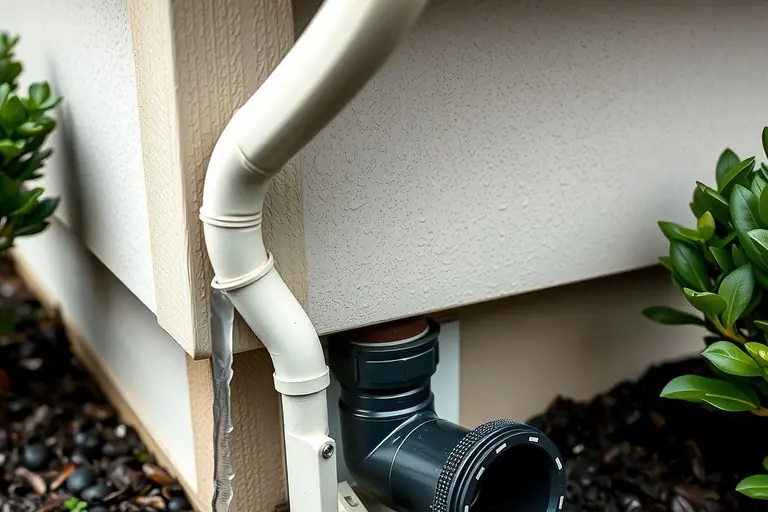
Your options
| Option | Solves | Notes | Typical cost (national) |
|---|---|---|---|
| Underground downspout line | Roof water at the foundation | Solid, smooth pipe; sloped to an outlet | $150–$350+ per downspout |
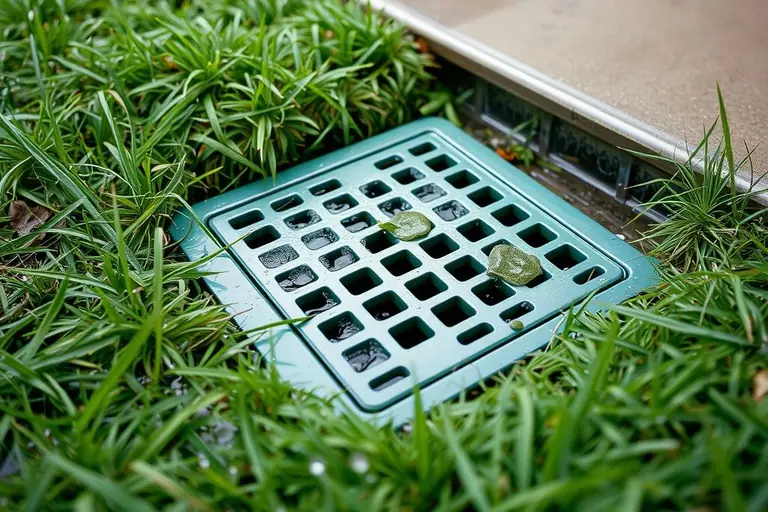
| Catch basin | Low spots in lawns, beds or patios | Grate and box connected to solid pipe | Basin $20–$130+ each, plus pipe and labor |
| Channel (trench) drain | Water across a driveway, patio or garage entry | Long grate set in concrete | $400–$1,200+ (one-car driveway) |
| Pop-up emitter | Ending a line in the lawn | Opens under water pressure, closes when dry | Low; part of the line |
| Dry well | No street or daylight outlet | Works only in absorbent soil | $50–$3,000+ depending on type |
Costs from HomeGuide; full context in the cost guide.
Dry wells: honest feasibility
A dry well is a perforated chamber or rock pit that holds roof water while it soaks into the ground. On lots with dense clay or shallow rock, the water has nowhere to go and the well fills up and backs into the pipe. Ask for a percolation test before you pay for one, and plan an overflow route.
Outlets and city rules
- Curb outlets and storm connections are controlled by each city or, in unincorporated areas, the County. Confirm before connecting.
- Only rainwater belongs in the storm system; storm drains flow to creeks.
- Daylight outlets need room downhill and must not erode the slope or send water onto a neighbor.
Gutter cleaning and gutter repair are a different trade; this page starts where the water leaves the downspout.
When surface fixes aren't enough
If the soil stays soggy after downspouts are handled, the water is in the ground. That's where a French drain comes in. On slopes, also read hillside drainage.
Questions homeowners ask
Where should downspouts drain?
Away from the foundation, to a spot where the water can soak in or flow away without coming back toward the house or onto a neighbor. Underground solid pipe to a curb outlet, storm connection, dry well or a safe daylight point is the usual permanent fix.
Is a dry well right for my yard?
Only if the soil absorbs water. Dense clay or shallow rock can leave a dry well full after the first storm. A simple percolation test (dig a hole, fill it, time how fast it drains) tells the contractor whether it can work.
Can downspouts connect to the street?
Sometimes. Curb outlets and storm-drain connections are regulated by each city or the County, and only clean rainwater may go into the storm system. Ask your city public works department or your contractor to confirm what is allowed at your address.
Do I need a catch basin or a channel drain?
A catch basin collects water at a low spot in a lawn, bed or patio. A channel (trench) drain is a long, narrow grate that catches water across a driveway, patio edge or garage entry. Both connect to solid pipe that carries the water to an outlet.